In 866, the Great Heathen Army captured the city of York and established Jorvik, a Scandinavian kingdom that transformed the settlement into one of the most important trading centres in the British Isles. Archaeological evidence from the Coppergate excavations reveals a bustling city of timber workshops, international merchants, and manufacturing hubs that connected York to markets across Europe and beyond.
The Capture of York and the Rise of Jorvik
The Viking force known as the Great Heathen Army landed in England in 865 with the intention of conquest. They capitalised on a civil war in Northumbria and captured York in 866 or 867. Halfdan Ragnarsson became the first king of Jorvik, ruling southern Northumbria from 875 or 876. The kingdom maintained close ties with the Kingdom of Dublin, forming part of a network of Scandinavian power in the British Isles.
The Coppergate Excavations
Between 1976 and 1981, major Viking remains were uncovered immediately south of Coppergate street during the demolition of a cinema and the Cravens confectionery factory. Archaeologists discovered well-preserved timber buildings, workshops, fences, animal pens, privies, pits, and wells dating from around 900 AD. The dig recovered more than 40,000 objects, including pottery, metalwork, bones, wood, leather, textiles, and plant and animal remains. These finds provide a detailed picture of daily life in Viking Age York.
A Hub of International Trade
Jorvik was a major manufacturing centre with busy international trade and thriving workshops and mints. The city formed part of a wider Scandinavian trading system, with routes reaching Norway via Shetland and Sweden via the Dnieper and Volga rivers to Byzantium and the Muslim world. Craftsmen in Jorvik worked metal using gold and silver from Europe, copper and lead from the Pennines, and tin from Cornwall. Amber from the Baltic was fashioned into jewellery, while soapstone, likely imported from Norway or Shetland, was used for cooking pots. Wine arrived from the Rhineland and silk from Byzantium, evidence of the city’s far-reaching commercial connections.
The Fall of Viking York
Eric Bloodaxe established himself as king in York but was driven out by King Eadred. Olaf Cuaran was reestablished as king from 950 to 952, after which Eric Bloodaxe returned and reigned until 954. Scandinavian domination of York ended when Eadred’s forces killed Eric Bloodaxe at the Battle of Stainmore in 954. Thereafter, the area was governed by earls appointed by the kings of England.
Jorvik’s Legacy in Modern York
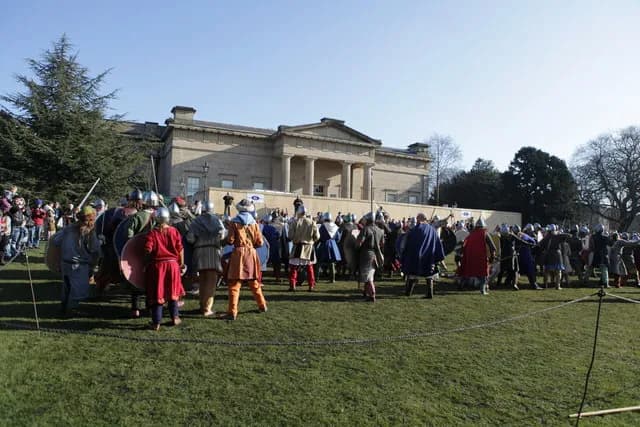
The Jorvik Viking Centre opened in 1984, created by the York Archaeological Trust. It features lifelike mannequins and dioramas depicting Viking life in the city, based on the Coppergate excavations. Visitors are taken through the dioramas in “time capsule” carriages. The centre was refurbished and enlarged in 2001 and 2010, and reopened in 2017 after flooding in 2015. By October 2022, it had received 20 million visitors. The centre also organises the annual JORVIK Viking Festival.
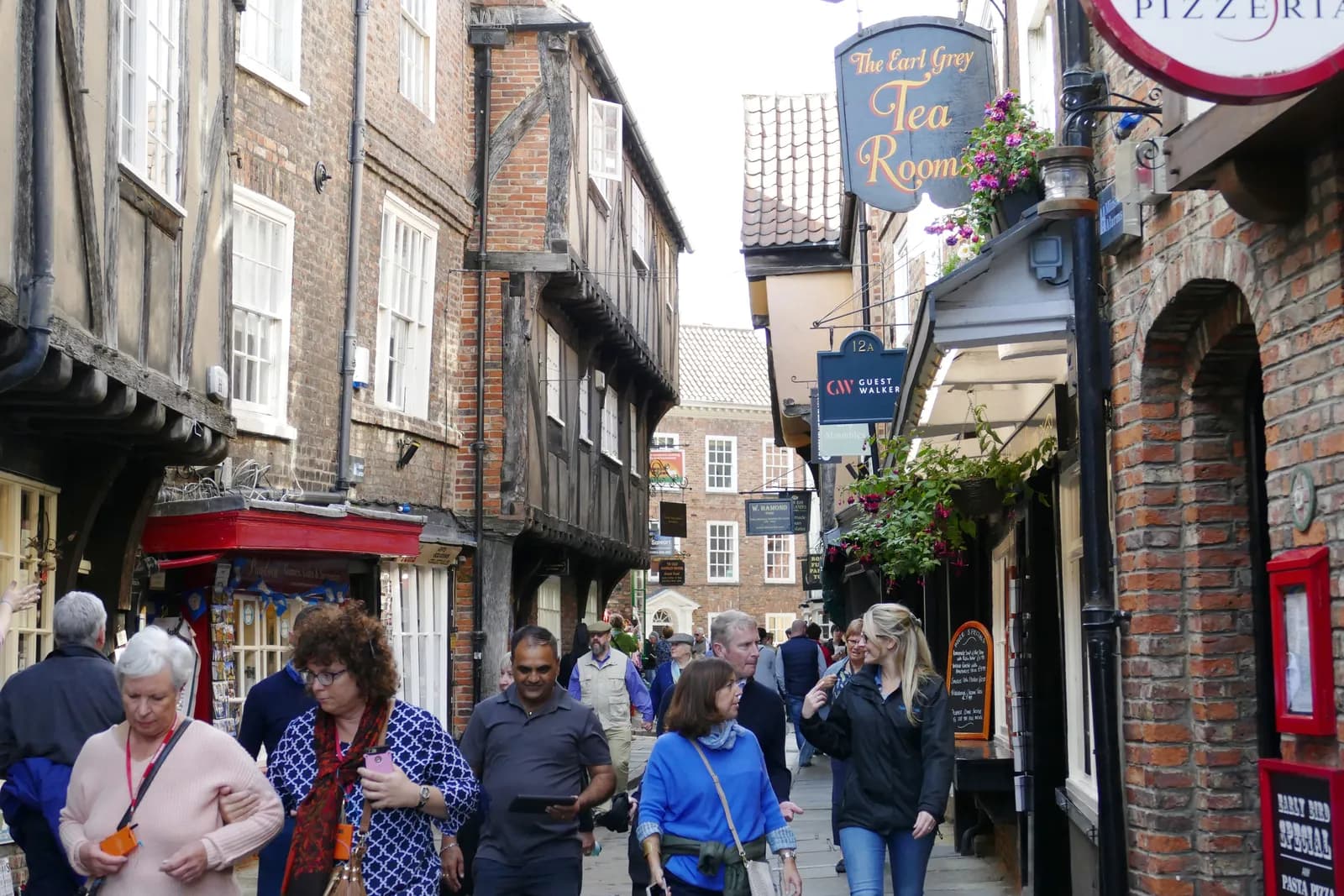
The Scandinavian legacy is also visible in the city’s geography. Old Norse influence survives in local place names: “gate” derives from gata, meaning street; “thorpe” from þorp, meaning village; and “by” from býr, meaning farm or settlement.