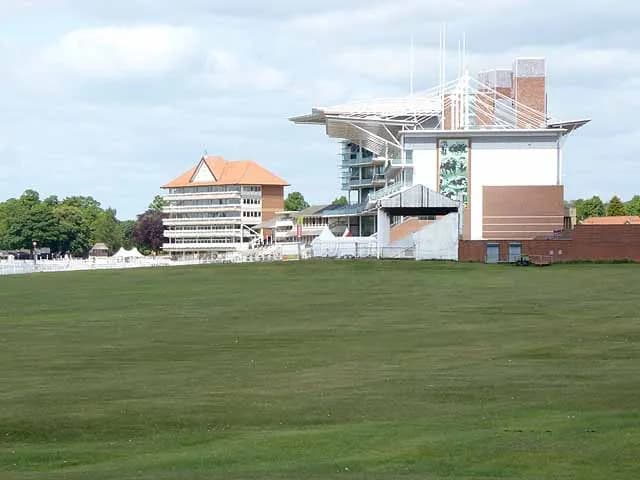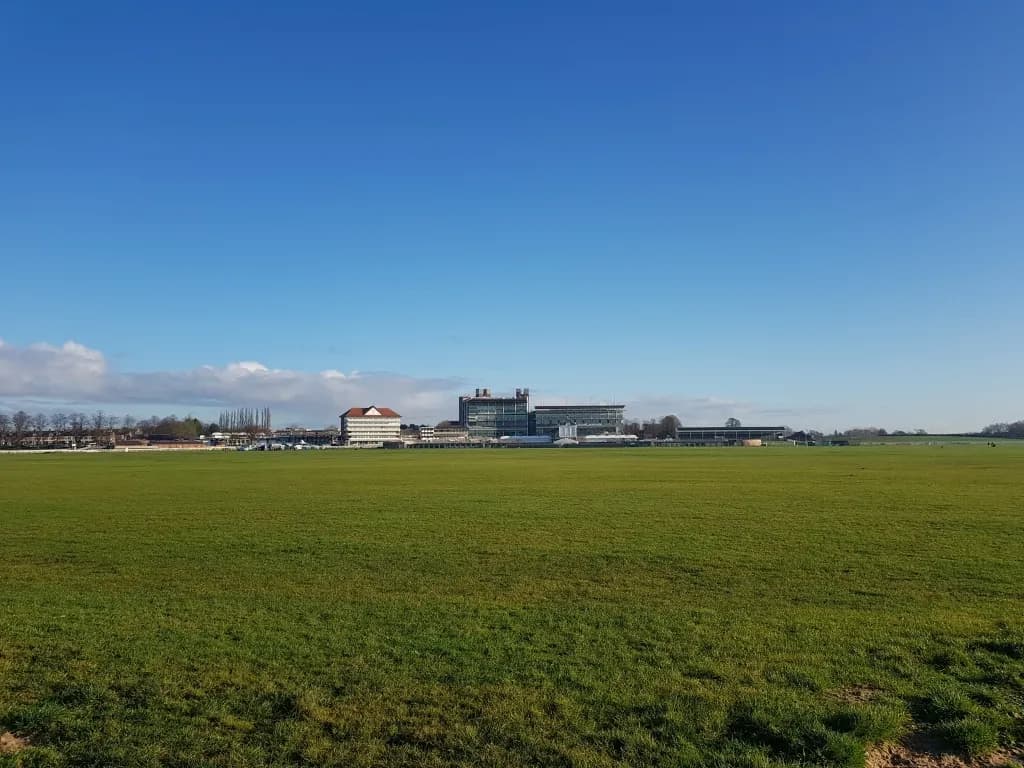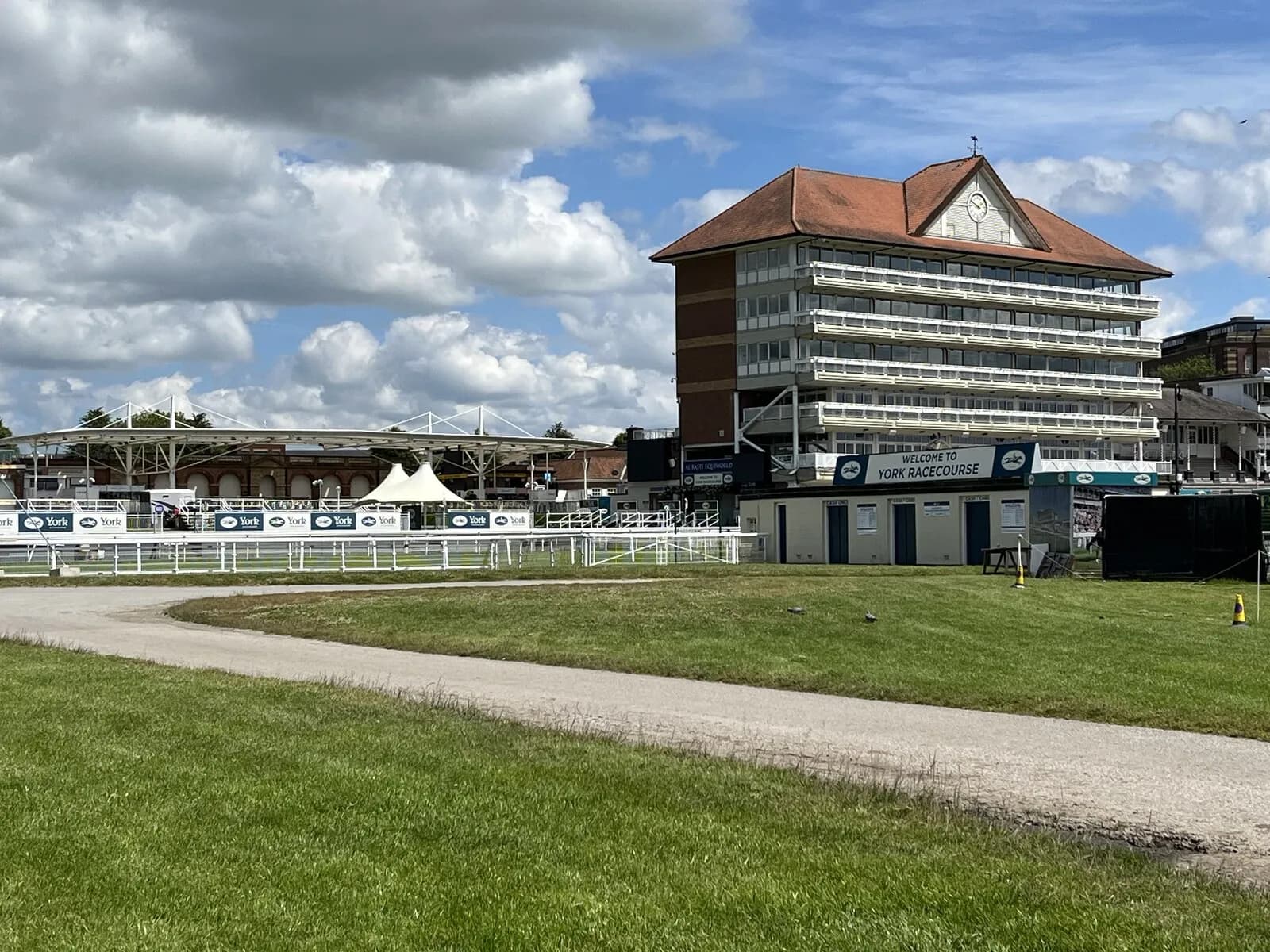
Walk out along Tadcaster Road on a crisp October morning and the Knavesmire opens up on your right: a broad sweep of common pasture, the stands lined up beyond it, and the city's towers just visible behind. Two days from now it will be packed. A few days after that it will be dog walkers and joggers again until spring. York's last race meeting of 2026 takes place on Friday 9 and Saturday 10 October, and it has a feel all of its own: the summer crowds have gone, the big festival prizes have been handed out, and what remains is a course full of people who simply love a day at the races.
The October fixtures
- Friday 9 October: York, billed by the course as Finale Friday
- Saturday 10 October: York, Sky Bet Sprint Trophy day, the final day of the York season
- Wednesday 14 October: Wetherby, the opening jumps meeting of its season
- Friday 30 and Saturday 31 October: Wetherby, the two-day Charlie Hall meeting
The Saturday is built around the Sprint Trophy, a big-field sprint that tends to produce a cavalry charge down the straight and a finish nobody can call until the line. It is a fitting way to close a season on one of the fastest, fairest tracks in the country.
From Roman legend to the gallows field
York's racing story is long, and the oldest part of it needs handling with care. It is often said that the Roman emperor Septimius Severus, who based himself at Eboracum in the early third century, brought Arab horses with him and that they were raced here. It makes a good tale, but the evidence for organised racing in Roman York is thin, and it is best treated as tradition rather than fact.
What is solidly documented is that racing in York moved around several sites before settling on the Knavesmire in 1731. The first race on the new ground, the King's Guineas, was won by a horse called Monkey. The name Knavesmire itself is usually traced to old English words for a boggy, low-lying pasture, which anyone who has watched a wet autumn meeting here will find easy to believe.
The Knavesmire had a grimmer function too. York's Tyburn, the city's gallows, stood beside the main southern road, the line of today's Tadcaster Road, from 1379. Its most famous victim was Dick Turpin, who was tried at the York Assizes in March 1739 and hanged on the Knavesmire on 7 April that year. He was convicted of horse theft, which gives the story a certain grim symmetry. The famous overnight ride to York on Black Bess was not his at all: the tale belonged to an earlier highwayman, John Nevison, and was pinned on Turpin by the novelist William Harrison Ainsworth in Rookwood in 1834. Executions drew huge crowds, and race meetings did well out of them. When hangings on the Knavesmire ended in 1801 and the gallows moved closer to the castle, attendance at the races fell away. A small plaque by Tadcaster Road marks where the scaffold stood.
In 1754 the Marquess of Rockingham commissioned the architect John Carr to design a grandstand. Carr's elegant two-storey building, with a viewing platform on the roof, has been described as the oldest grandstand in the modern sense at any sporting venue in the world.
The revival came in 1843, when the new clerk of the course, John Orton, introduced the Great Ebor Handicap, named after Eboracum. Originally run over two miles, it is now run over just short of a mile and three-quarters and is the most valuable flat handicap in Europe, the closing race of the four-day Ebor Festival in August. Lester Piggott won it five times, and the great dual-purpose horse Sea Pigeon took it in 1979 at the age of nine.
The modern jewel is the Juddmonte International, first run in 1972, when Roberto beat the previously unbeaten Brigadier Gerard in one of the most famous upsets in British racing, with both horses inside the old course record. In 2005 the Knavesmire hosted Royal Ascot while Ascot was rebuilt, a sign of how highly the course is regarded.
For the seasoned racegoer
York is a left-handed, flat, galloping circuit of roughly two miles with a long straight, and its reputation is for fairness: there are no sharp turns or punishing climbs, and races tend to be won by the best horse on the day rather than the luckiest. The sprint course runs straight, and on a big-field day the draw can matter, so it pays to watch the early races to see which side of the track is riding faster.
The October meeting sits at an interesting point in the calendar. British Champions Day at Ascot is a week away, many of the top horses are being saved for it or retired for the winter, and the York cards lean towards competitive handicaps and improving younger horses. That makes it a punter's meeting rather than a spectacle of stars. Ground in October can change quickly on the Knavesmire, so check the going on the morning.
For a first visit
A raceday has a gentle rhythm. Gates open well before the first race, and there is usually around half an hour between races. In that time the horses for the next race are led round the parade ring, which is the best free show on the course. Look for a horse that walks with purpose, has a bit of shine to its coat and is not sweating heavily or fighting its handler. Then watch them canter down to the start.
York has several enclosures at different levels, and the dress code is smarter in the premier areas, so check the course website before you go. Smart-casual is fine in most places; warm layers and comfortable shoes are wise in October.
For betting, you can use the on-course bookmakers in the betting ring, who each set their own odds, or the Tote, where all the money goes into a pool and is shared among the winners. An each-way bet is two bets in one: half on the horse to win and half on it to finish in the places, so it costs double the stake. Set a budget before you arrive, treat it as the price of a good day out, and stop when it is gone.
Making a day of it in York
The racecourse is within walking distance of York railway station, and the walk out along Blossom Street and The Mount is a pleasant way to arrive. With a little planning, a race day becomes a full city day. The Minster is the obvious starting point, and the circuit of the medieval walls gives the best free views in York. The Shambles and the narrow streets around Stonegate and Petergate are worth a wander before the crowds build.
Families are well served by the National Railway Museum, close to the station, and by the Jorvik Viking Centre. For the Turpin story, York Castle Museum stands on the site of the old prison where he was held, and Clifford's Tower is next door. His grave is in St George's churchyard on Fishergate. Rowntree Park and the riverside paths along the Ouse give a quieter walk back towards the Knavesmire.
Then on to Wetherby
When York's season ends, attention in this part of Yorkshire turns to jumping, and Wetherby is the nearest course. It has raced on its present site on York Road since Easter 1891. The left-handed oval of about a mile and a half has easy bends and suits long-striding horses with stamina and a good jump in them. Flat racing was only added in 2015, but the course is at heart a National Hunt track.
Its opening jumps fixture is on Wednesday 14 October. The big one is the two-day Charlie Hall meeting on Friday 30 and Saturday 31 October, with the Grade 2 Charlie Hall Chase as its centrepiece. First run in 1969, the race is a traditional early-season target for top staying chasers. One Man, See More Business and Cue Card are all on its roll of honour, and Bravemansgame won it in 2022 before going on to the King George VI Chase at Kempton. Wetherby sits just off the A1(M), so from York it is a straightforward drive west.
Before you set off
Check the York and Wetherby websites for gate and race times, tickets, the going and any travel advice. Autumn weather can cause inspections or abandonments at short notice, so look again on the morning before you leave.